

Every trader faces this decision: how to choose a prop firm. It isn’t just a signup, it’s a strategy choice. The firm you pick sets the rules you’ll trade under, the tools you’ll use, and how you can grow.
When the rules fit your style, trading feels natural. When they don’t, you end up managing limits instead of reading the market. That’s why this choice matters so much.
This guide gives you a quick, practical checklist. Reputation, challenge model, risk limits, platform quality, support, fees, and transparency. So you can compare firms side-by-side and pick the one that lets you trade your plan.
Key Takeaways
- Use a clear checklist to compare prop firms, so you’re not swayed by marketing alone.
- Prioritize reputation, transparent rules, payout cadence, and fair profit splits.
- Make sure the platform (MT4/MT5 or equivalent) is fast, reliable, and friendly to your workflow and EAs.
- Look for responsive, multilingual support if you’re a global trader.
- Review total cost of ownership: entry fees, resets, platform fees, and any “gotchas.”
- Read both expert reviews and real trader reviews to validate credibility and day-to-day experience.
- Choose the firm whose rules match how you trade, so the evaluation feels like your live approach, not a different game.
Why Does Choosing The Right Prop Firm Matter?
A prop firm is a company that lets traders operate with the firm’s funds and share in the profits. The match you pick affects everything: the risk rules you have to respect, the tools you’ll use daily, and how fast you can scale.
If the firm’s rules fight your strategy, say you prefer swing trades, but the daily loss limits are too tight, you’ll be managing stress, not trades. Pick a partner whose structure supports the way you already execute. That’s how you grow with fewer detours.
What Are the Key Factors to Evaluate When Choosing a Prop Firm?

Use this high-level checklist to compare prop firms quickly, then drill down:
- Reputation & reliability
Track record, broker relationships, public leadership, expert reviews, and real trader reviews. - Challenge & funding model fit
One-step vs two-step, time limits (if any), minimum trading days, scaling path, and profit split ranges. - Rules & risk limits
Daily loss limits, overall drawdown (static vs trailing), news trading rules, weekends, copy/EAs. - Platform & tools
MT4/MT5 or equivalent, execution quality, stability, custom indicators, and algo support. - Customer support & global reach
Hours of coverage, response times, multilingual support, and regional accessibility. - Fees & transparency
Entry fees, resets, platform fees, refunds, and any conditions attached to payouts. - Payout policy
When payouts start, frequency (on-demand vs biweekly), and method.
As you move into the deeper sections, Reputation and Reliability, Funding Models, Platforms and Tools, Support, and Fees/Transparency, use this checklist as your map. The goal is simple: align firm structure with your strategy so you can trade your plan, not the firm’s quirks.
Reputation and Reliability of the Prop Firm
When considering joining the best prop firm, one of the most critical factors is the reputation of the company. This includes both the company’s history and its association with reputable partners in the trading world.
A quick note on credibility. Atmos operates with the backing of Taurex, a regulated broker with a long runway in the industry. That relationship signals real oversight and a stable operating environment, useful when you care about clear rules and clean execution. In general, choosing a prop firm that’s connected to a licensed, trusted broker reduces noise: policies tend to be clearer, and operational standards are easier to verify.
Reputation isn’t just a headline claim. Look for transparent rule pages, a consistent history of funded-trader outcomes, and third-party reviews you can cross-check. Atmos benefits from Taurex’s global footprint and industry experience, which adds an extra layer of confidence for traders who want structure and support without guesswork.
Types of Challenges and Funding Models
The nature of the challenge and the funding process is another important consideration. Different prop firms offer a variety of challenge structures, timelines, and funding options, so it’s essential to choose a firm whose model aligns with your trading style and financial goals.
Prop firms also offer instant funding upon successful completion of programs like the one-step evaluation process. This feature allows traders to start trading with real capital immediately, rather than waiting for days or weeks.
When selecting a challenge, pay attention to:
- The rules and criteria: Are they clearly outlined, and do they align with your trading strategy?
- The funding amount: How much capital will you have access to if you pass the challenge? Ensure it is sufficient to allow for profitable trading without excessive risk.
- Profit-sharing terms: What percentage of profits will you retain after successful trades? This should be clearly stated upfront.
By choosing a prop firm with transparent and flexible funding models, such as those offered by Atmos, you ensure that your path to becoming a funded trader is smooth and straightforward.
Platform and Tools Provided by the Firm
A high-quality trading platform is essential for success in prop trading. Many prop firms offer platforms like MT4 and MT5, which are industry standards for professional traders due to their reliability and extensive toolsets.
Atmos provides traders with these professional-grade platforms, ensuring access to sophisticated charting, advanced order execution, and customisable features that are crucial for effective trading. This is especially important when you are dealing with larger accounts and need precision in your trades.
Key factors to consider when evaluating the platforms:
- User-friendly interface: The platform should be intuitive and easy to navigate.
- Customisation options: Can you adjust the layout, indicators, and charts to suit your preferences?
- Speed and reliability: A fast and stable platform is crucial for executing trades without delays.
- Support for algorithmic trading: For traders using automated strategies, make sure the platform supports trading bots and expert advisors.
Choosing a prop firm that provides access to the latest and most reliable platforms, like MT5, ensures you have the tools needed to trade successfully.
Customer Support and Global Presence
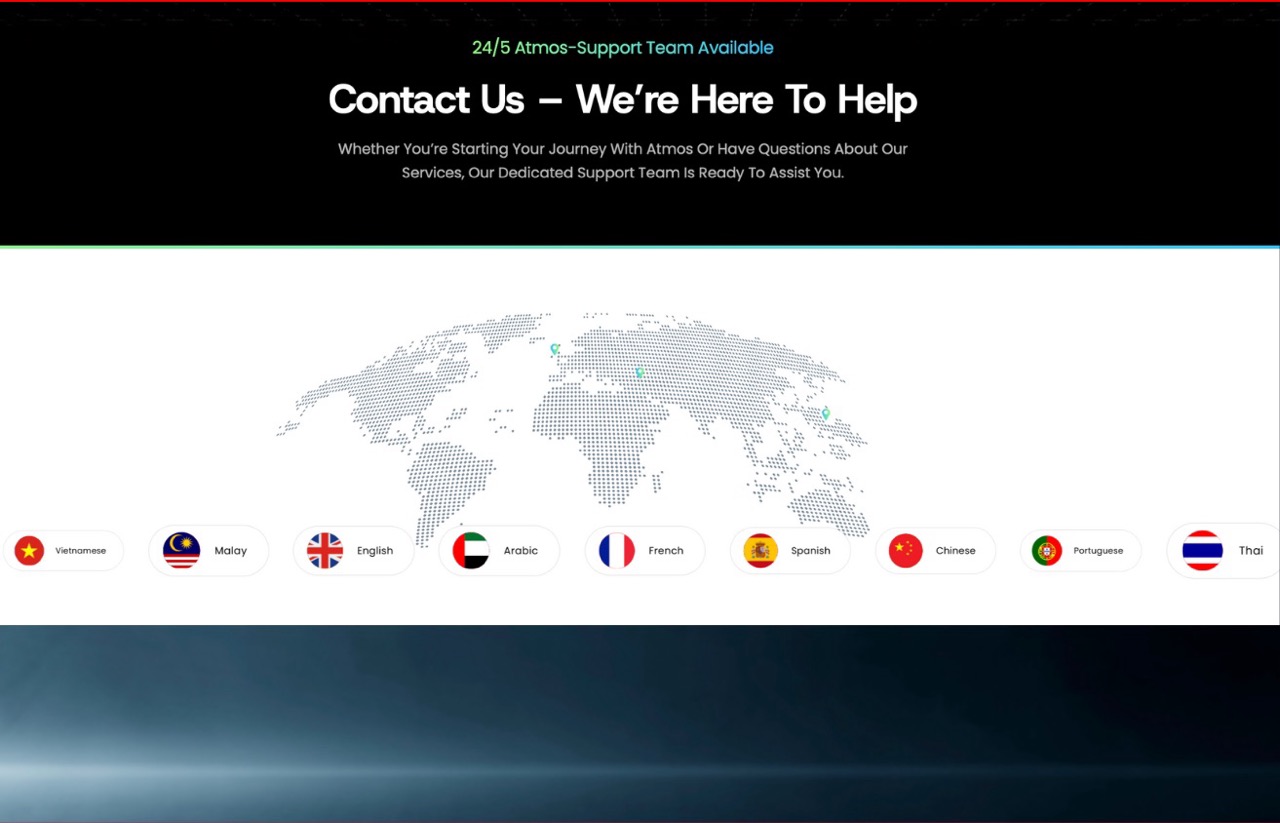
Customer support is another vital aspect when evaluating a prop firm. Good customer support can be the difference between a seamless trading experience and frustration.
When selecting a prop firm, check:
- Availability of support: Is customer service available 24/7 or only during specific hours?
- Multilingual support: If you are based in a non-English-speaking country, check if support is available in your language.
- Response times: How quickly does the firm respond to inquiries and issues?
Atmos excels in this area, offering global customer support services. No matter where you are in the world, you can expect to receive prompt and helpful assistance in resolving any issues that may arise during your trading journey.
Knowing how to choose a prop firm with a strong customer support system ensures that you can focus on trading without worrying about technical problems or delays in communication.
Additional Evaluation Criteria for Global Traders
Global traders should check for three things first: language coverage, regional availability, and time-zone aligned support. If a trader can explain an issue in their preferred language and get an answer during their local trading hours, friction drops and focus returns to execution.
Practical Checks:
- Support hours and channels. Live chat plus email is standard; phone or Discord can help during outages.
- Multilingual coverage. English is common; language options beyond that reduce back-and-forth and mistakes.
- Regional operations. Payment processing, KYC, and platform routing should work reliably in the trader’s country.
- Latency and servers. For MT4/MT5 or equivalent, proximity to data centers matters for order quality.
Atmos is designed for global traders, backed by Taurex’s international infrastructure, which helps with reliable onboarding, execution stability, and region-friendly support windows. That kind of footprint can make day-to-day trading simpler and less error-prone.
Fees and Transparency in Operations
Start by mapping the total cost of participation. Listing each fee on one page prevents surprises later and makes firm-to-firm comparisons clean.
What to map:
- One-time costs. Challenge entry, resets, and add-ons.
- Ongoing costs. Platform access, data, or monthly subscriptions (if any).
- Payout conditions. Minimum days, cooldowns, and any requirements tied to withdrawals.
- Refund rules. When are fees returned or credited, and under what conditions?
- Fine print. News restrictions, weekend holds, lot size caps, copy/EAs limitations.
Two quick rules of thumb:
- If a fee isn’t clearly stated on the public site, treat it as a red flag.
- If a condition affects payouts or trade permissions, it deserves a line in the trader’s prep checklist.
Atmos publishes rules and fees in plain language and aligns payouts on a predictable cadence, which helps traders plan entries, scaling, and withdrawals without guesswork.
The Application Process: What to Expect
Most firms follow a simple pattern: create an account, choose an evaluation, complete KYC, and get platform credentials. Timelines vary, but same-day access is common once payment clears and identity is verified.
Typical steps:
- Account sign-up and plan selection.
- KYC verification (ID + address).
- Platform setup (MT4/MT5 or equivalent) and rule brief.
- Start of the evaluation: minimum trading days and risk rules apply.
- Review and funding once targets and rules are met.
Preparation helps:
- Have clear photos of the required documents to avoid KYC delays.
- Read the rule page twice, especially drawdown math, trade windows, and news events.
- If interviews or knowledge checks are required, expect rule scenarios and basic risk questions.
Atmos follows a streamlined flow with clear rule documentation and fast credential delivery, so traders can begin the evaluation without long waits or unclear steps.
Common Mistakes Traders Make Choosing Prop Firms

Most issues start before the first trade. The firm didn’t match the strategy, or the trader didn’t map the rules carefully.
Frequent missteps:
- Picking on marketing, not on rule fit. Tight daily loss limits with a swing strategy is a mismatch.
- Ignoring trailing vs static drawdown math. Trailing models change risk mid-trade; static models don’t.
- Skipping cost math. Entry + resets + platform can add up; compare prop firms with a single cost table.
- Assuming platform parity. Stability, latency, and symbol specs differ more than many expect.
- Overlooking payout terms. Start date, cadence, and method matter for planning.
- Not reading real trader reviews. Day-to-day support quality shows up in community feedback long before it hits a brochure.
A simple fix is to run a 7-day dry run on the evaluation rules inside a demo environment that mirrors the firm’s constraints. If the strategy fights the rules, that shows up quickly.
Choosing the Right Prop Firm
Being informed on how to choose a prop firm properly before signing up for a challenge is an important step in ensuring your success as a trader. Look for a firm that offers transparent rules, high-quality platforms, flexible funding options, and excellent customer support.
Atmos provides all these elements, making it a top choice for traders seeking security, efficiency, and professional tools. By following these guidelines, you can confidently choose a prop firm that aligns with your goals and trading style, paving the way for a successful and profitable trading journey.
FAQs
What are the key factors to consider when choosing a prop firm?
Reputation, rule fit (daily loss and drawdown type), challenge model (one-step vs two-step), platform quality, support coverage, instruments/leverage, fees, and payout terms. Start with a comparison checklist and verify each item on the public rule pages.
How do I evaluate a prop firm’s reputation?
Look for transparent rule documentation, clear ownership or broker relationships, consistent funded-trader outcomes, and third-party expert reviews. Real trader reviews reveal support quality and operational reliability in practice.
Do prop trading firms offer multilingual support for global traders?
Many offer English-first support; some add multilingual coverage. Traders who need non-English support should confirm languages and support hours before buying an evaluation.
How can I compare prop firms to find the right one?
Build a one-page grid: rules (daily loss/drawdown type), challenge model, instruments/leverage, platform, support hours/languages, fees, payout cadence, and refunds. Compare prop firms line-by-line and pick the row that best matches the intended strategy.
What are some red flags to watch out for when choosing a prop firm?
Hidden or vague fees, unclear drawdown math, inconsistent payout language, frequent platform outages, and support that takes days to answer. If rules are only explained in marketing images, keep looking.
How do expert reviews contribute to the credibility of prop trading platforms?
Expert reviews pressure-test rules, platform stability, and support responsiveness. They also compare edge cases (news events, trailing math, payout timing) across firms, which helps traders spot mismatches fast.
How do real trader reviews impact the selection of prop trading firms?
They capture what daily operations feel like, response times, credential delays, payout consistency, and platform quirks. When multiple independent traders repeat the same issue, assume it’s real.
Is it better to choose the firm with the highest payout?
Only if the rule fit and the platform quality are equal. A slightly lower split with stable execution, clear rules, and reliable payouts often leads to better net results than a headline number that is hard to realize.